
How to Use LED Strip Light for Festive Decorations: A Complete Christmas Guide
December 19, 2025
High Bay Heroes: Choosing the Right Fixture for Warehouses & Factories
December 26, 2025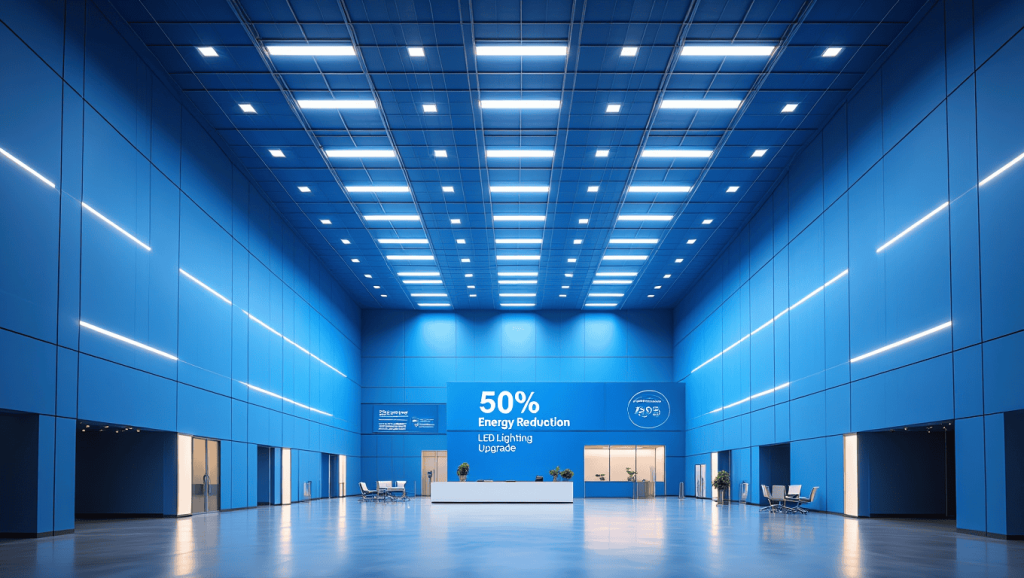
Across Canada, facility managers are being squeezed from both sides. Energy costs keep climbing, and expectations around sustainability and efficiency are no longer optional. Many organizations respond by planning large capital projects-new equipment, major renovations, complex system upgrades.
But one of the most effective ways to reduce costs often goes unnoticed because it feels too simple lighting.
Why Lighting Upgrades Quietly Deliver One of the Fastest Paybacks
A modern LED retrofit isn’t just about swapping fixtures. Done properly, it becomes a measurable financial decision with a short payback and long-term gains.
At Faraday Lighting, we’ve watched facilities across Ontario cut lighting-related energy use by more than half-sometimes closer to 80%-almost immediately. The reason is straightforward: older lighting systems waste an enormous amount of power.
To understand why the numbers work so well, you have to look beyond the electric bill.
The Three Ways LED Retrofits Pay You Back
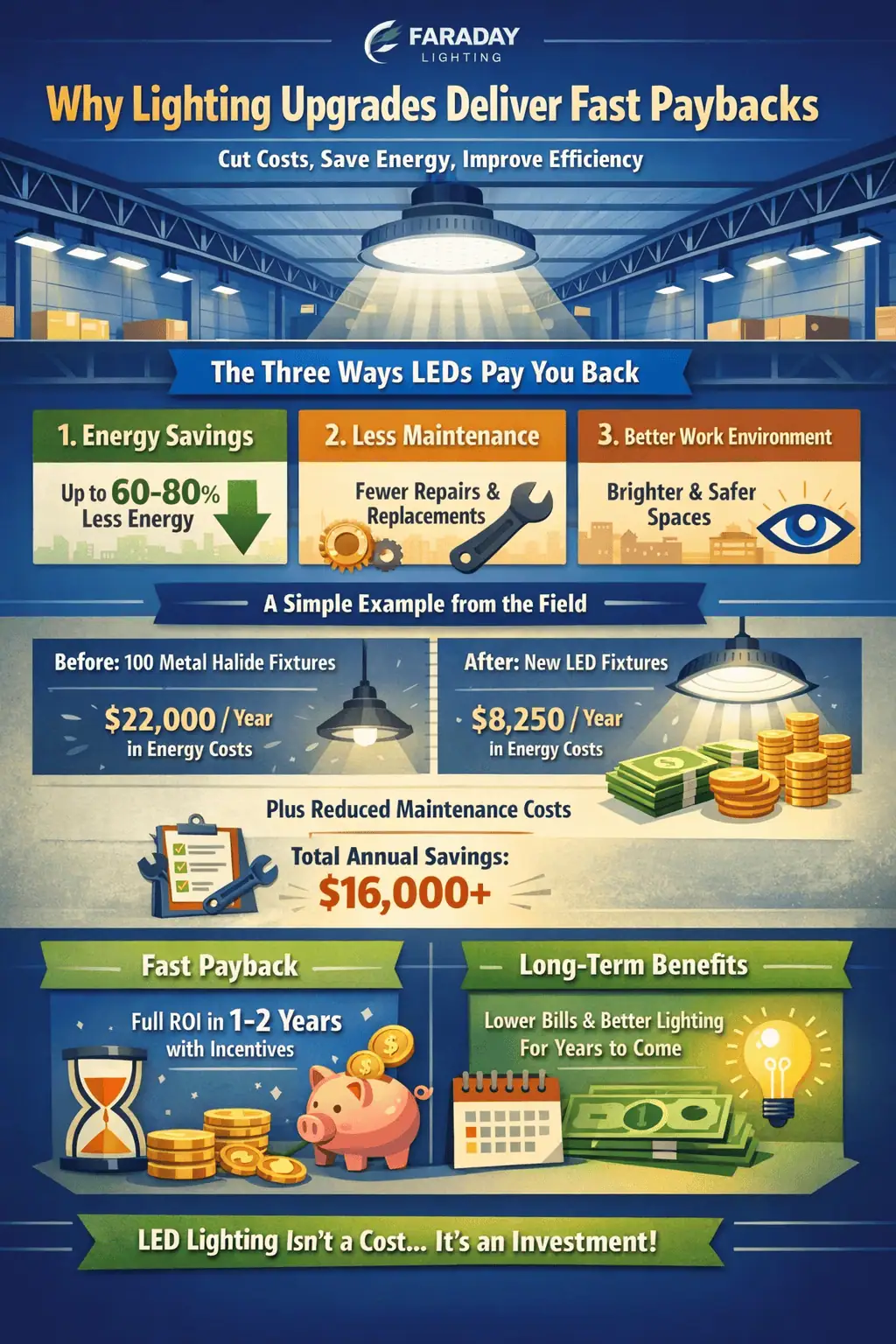
1. Energy Savings You See Right Away
Traditional lighting systems-metal halide, high-pressure sodium, and older fluorescent setups-consume far more power than they need to. Much of that energy is lost as heat rather than usable light.
Modern LED fixtures deliver significantly more light while using far less electricity. For example, replacing a 400-watt metal halide fixture with a 150-watt LED typically reduces power consumption by over 60%, while maintaining or improving light levels on the floor.
This is where the fastest savings appear. The moment the lights turn on, energy usage drops.
2. Maintenance Costs That Practically Disappear
In large facilities, the real cost of lighting isn’t the bulb-it’s everything around it.
Changing a fixture mounted 25 or 30 feet in the air means lifts, safety planning, labor, and downtime. Traditional systems require frequent lamp and ballast replacements, which quietly add up year after year.
LEDs are solid-state fixtures with no filaments or gases to fail. High-quality industrial LEDs are designed to run for decades in normal operating conditions. That means fewer disruptions, fewer service calls, and far less money spent just keeping the lights on.
For many facilities, maintenance savings alone justify a large portion of the upgrade.
3. Better Light Improves How People Work
Not all returns show up neatly on a utility statement.
Poor lighting contributes to eye strain, fatigue, mistakes, and accidents. In manufacturing and warehouse environments, inconsistent or low-quality light makes it harder to read labels, inspect materials, or spot hazards.
Upgrading to brighter, more consistent lighting with accurate color rendering improves visibility and reduces errors. Even a small boost in productivity or safety can outweigh the energy savings over time.
A Simple Example from the Field
Consider a typical Ontario warehouse operating 100 metal halide fixtures.
- Annual energy cost (before): approximately $22,000
- Energy cost annual (after LED): approximately $8,250
- Annual energy savings: $13,750
Add in reduced maintenance-fewer replacements, no ballasts, no lift rentals-and total annual savings often reach or exceed $16,000.
When available energy incentives are applied, many projects recover their full cost within one to two years. After that point, the lighting system continues generating savings for the rest of its lifespan.
Why a “Turnkey” Approach Maximizes ROI
Many businesses make the mistake of buying cheap LED “corn bulbs” or fixtures online and handing them to a general contractor. This rarely yields the best ROI.
A Turnkey LED retrofit by Faraday Lighting ensures:
- Professional Audit: We find the exact fixtures that qualify for the highest rebates.
- Engineering & Photometrics: We ensure the layout is optimized so you don’t buy more fixtures than you need.
- Incentive Management: We handle the paperwork for Save on Energy programs and other Ontario-specific incentives, ensuring you get your money back faster.
Why Execution Matters
Not all LED upgrades deliver the same results.
Buying low-cost fixtures online and installing them without proper planning often leads to uneven lighting, overbuying, missed incentives, and disappointing performance. The strongest returns come from a complete approach-one that considers fixture placement, light levels, operating hours, and available rebates before installation begins.
When lighting is designed correctly from the start, the numbers work harder and the space works better.
Lighting Isn’t an Expense-It’s an Asset
Facilities still running on outdated lighting systems pay for that inefficiency every month, often without realizing it. An LED retrofit shifts lighting from a recurring cost into a long-term investment-one that reduces energy use, simplifies maintenance, and improves working conditions at the same time.
In a challenging economic environment, projects that pay for themselves quickly aren’t just upgrades. They’re smart financial decisions.