Toronto Office Building Reduces Lighting Costs by 54% with T8 LED Tubes
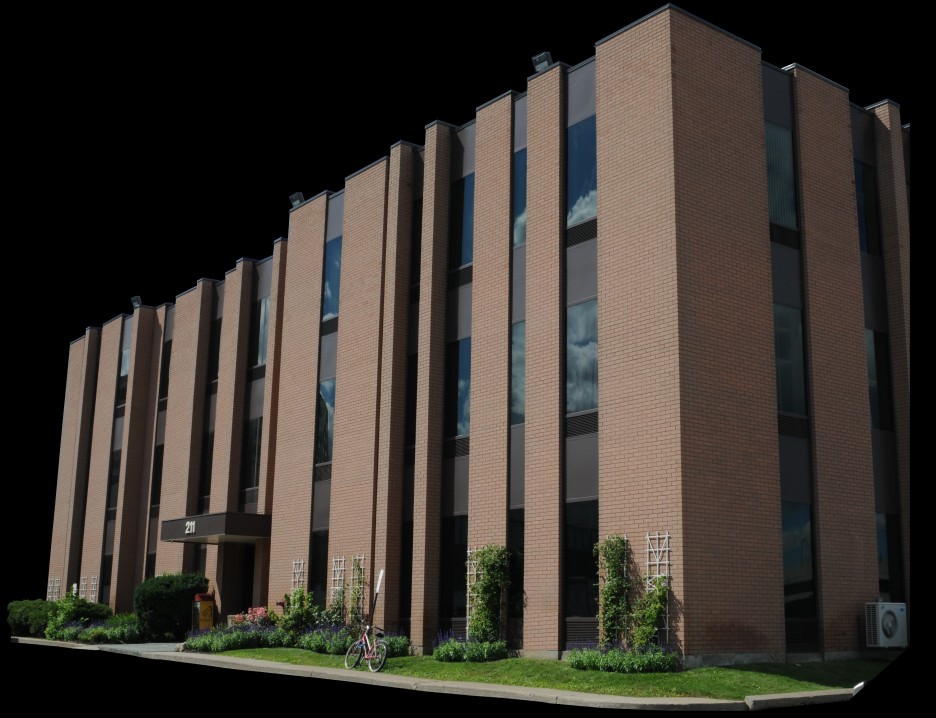
211 Consumers Road is a 40+ year-old office building originally constructed when electricity was inexpensive. Rising energy costs made it essential to improve energy efficiency while maintaining competitiveness. Building management focused on HVAC and lighting upgrades, ultimately transitioning to LED technology.
The interior lighting at 211 Consumers primarily relied on first-generation T8 fluorescent tubes. These fixtures required frequent replacement due to burnt-out lamps and failing ballasts, resulting in ongoing maintenance labor and increased operating costs. Growing concerns around mercury exposure also forced management to address fluorescent tube disposal. When evaluating the full life-cycle cost of T8 fluorescent lighting, re-lamping and disposal emerged as significant expenses. Additionally, the use of five different fixture types increased inventory requirements for tubes and ballasts. Common areas such as lobbies, hallways, and stairwells operated lighting 24/7, while the lower lobby relied on PAR38 halogen lamps that consumed excessive amounts of power.
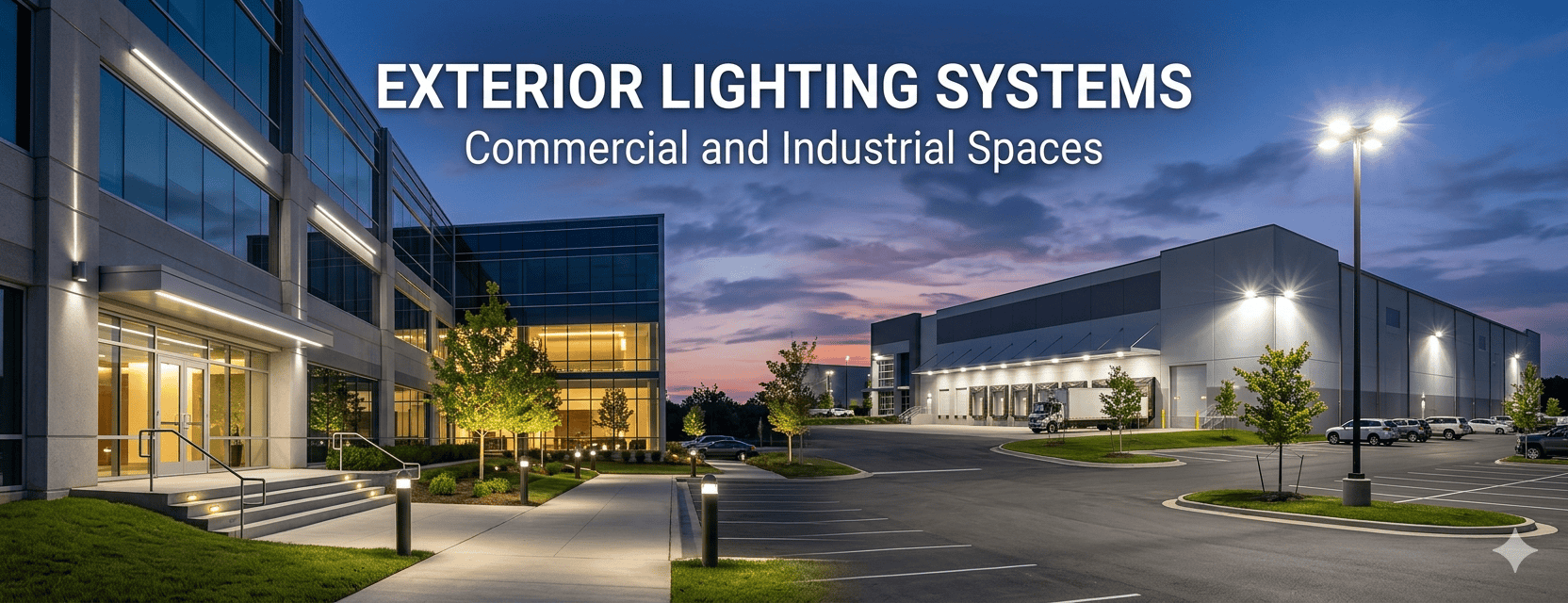
Exterior lighting consisted of a combination of HID spotlights and wall packs rated at 400 watts and 250 watts, respectively, which were necessary to maintain property security but contributed heavily to overall energy consumption.

Energy Management Goals
- Reduce overall lighting energy costs by 50%
- Reduce operating costs related to T8 re-lamping
- Find a feasible solution for the ongoing disposal of mercury-poisoned fluorescent lamps
- Maintain high-level of building security, inside and outside, with proper lighting
- Improve aesthetics with lighting solutions
- Achieve a payback period of two years or less
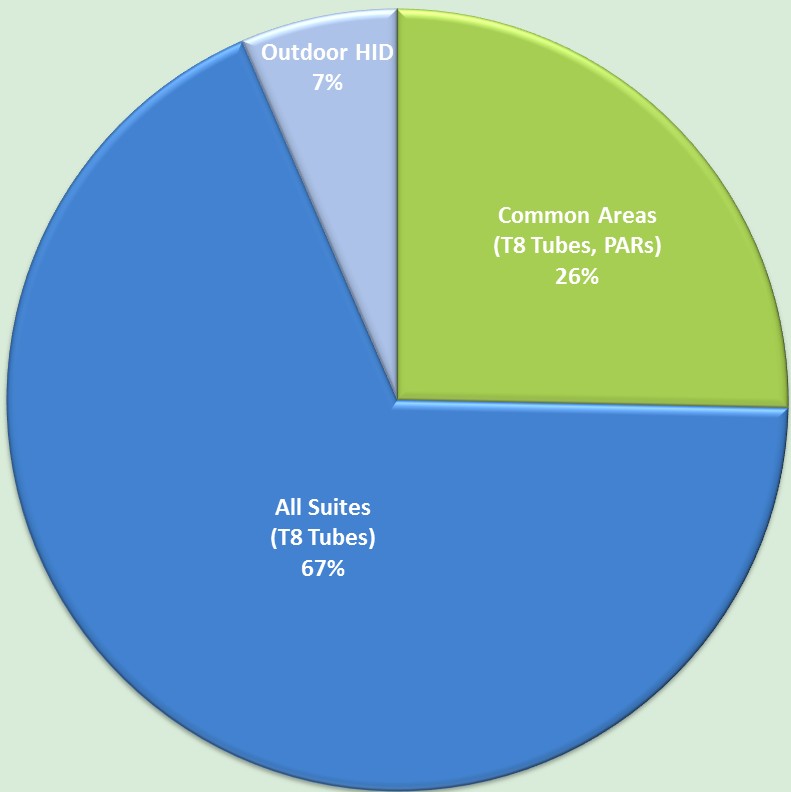
Initial Lighting Energy Consumption
Tenant Suites > 215,650 kwh
Common Areas > 80,070 kwh
Outdoor Lighting > 20,586 kwh
Annual Lighting Total > 316,250 kwh
| Energy Use BEFORE | Energy Use AFTER | Energy Drop | ||
|---|---|---|---|---|
| 4’ T8 Tubes | 245,087 kWh 60 kW |
LED T8 Tubes | 123,328 kWh 33 kW |
49% |
| 2’×2’ U-Tube T8 | 25,229 kWh 2.9 kW |
2’×2’ LED Panels | 8,673 kWh 1.0 kW |
65% |
| PAR Lamps | 25,404 kWh 2.9 kW |
LED PAR Lamps | 3,155 kWh 0.4 kW |
87% |
| HID Exterior | 17,597 kWh 4.7 kW |
DHID Retrofits | 9,735 kWh 2.6 kW |
45% |
| TOTAL |
313,317 kWh 70 kW |
TOTAL |
144,891 kWh 37 kW |
54% |
Implementing LED Technologies
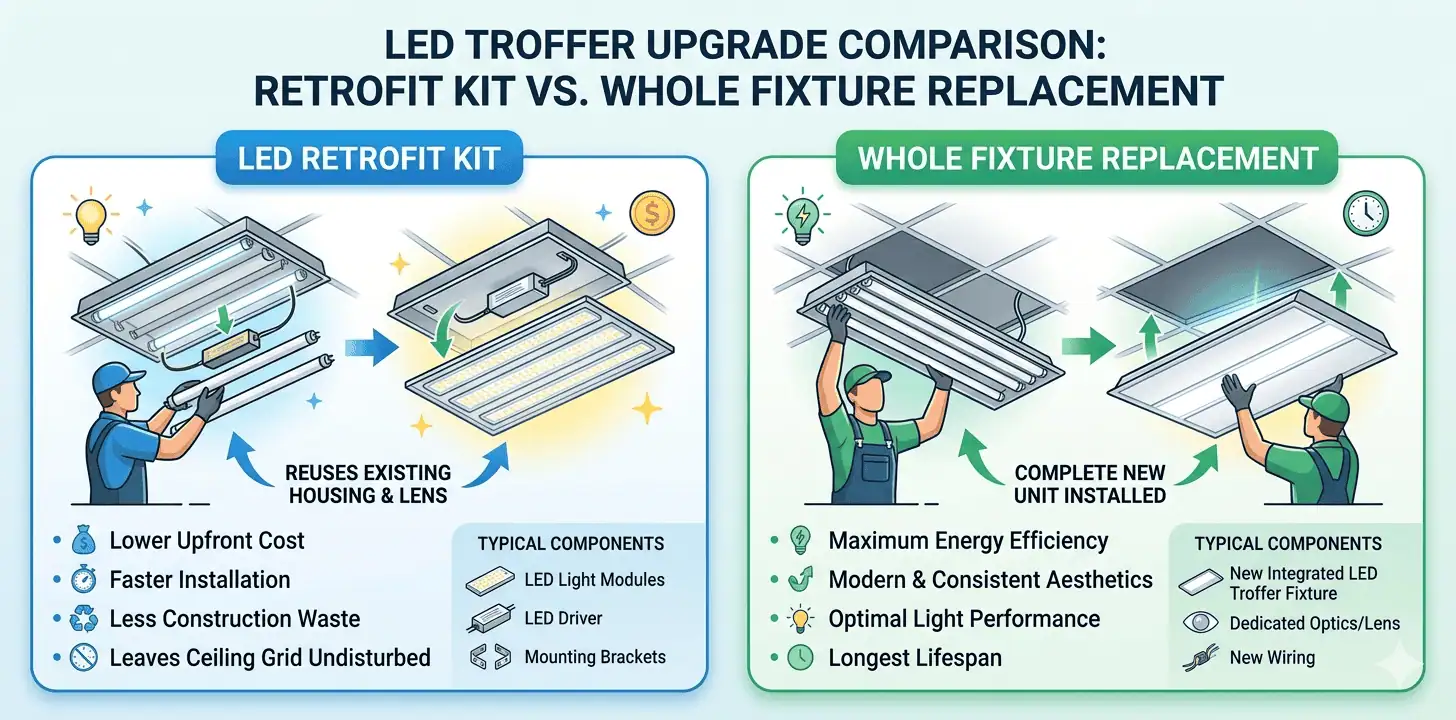
After evaluating the lighting technologies available in the marketplace, building management made the decision to transition entirely from fluorescent lighting to LED solutions. This shift was driven in part by the wide range of LED options available, including T8-style lamps compatible with existing fixtures, PAR lamps, and LED flat panels capable of replacing complete T8 fixtures.
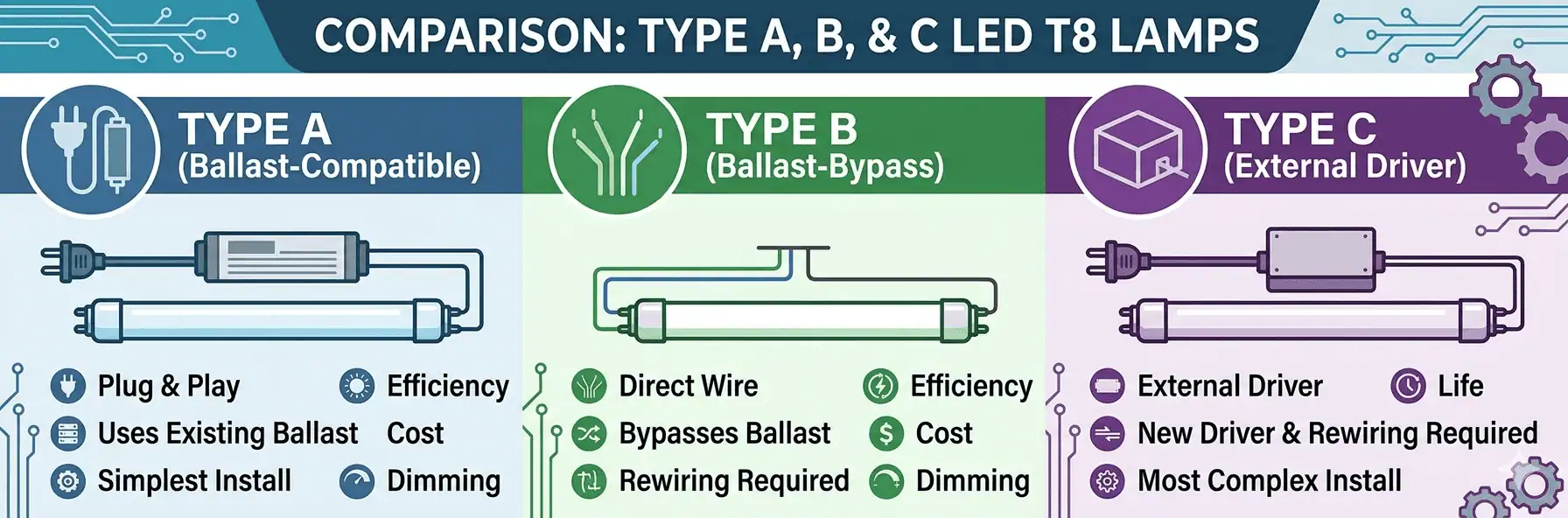
With a lifespan exceeding 50,000 hours, these LED technologies are expected to reduce electricity consumption by 50–65%, depending on the application, while lowering operating costs related to re-lamping and disposal by approximately 60%. Existing T8 fluorescent fixtures were retrofitted with T8 LED lamps by removing the ballasts and rewiring the fixtures, reducing lamp wattage from 32 watts to just 18 watts. Additionally, 2’ × 2’ fixtures that previously consumed 66 watts were replaced with high-efficiency 22-watt LED panels. PAR lamps achieved an 87% reduction in wattage when upgraded to LED alternatives.
All LED products installed as part of the retrofit were eligible for rebates from Toronto Hydro under the OPA’s saveONenergy program.
The Results
The results of the retrofit surpassed the original goal with a total energy reduction of 54%. Annual savings from reduced electricity consumption is expected to exceed $20,000. Based on the capital invested for the retrofit of the common areas, the ROI for the common areas was about 60% with a 20 month payback period based on energy savings alone. The rebate from Toronto Hydro covered about 15% of the cost of the project. Once the original ballasts and fluorescent T8 lamps were replaced with the LEDs, the monthly replacement of burned out ballasts and lamps ceased. This is expected to result in an additional operational savings of $1,700 each month, saving the building about $100,000 in operational and replacement costs over the life of the project.

“T8 LED lamps saved us half the power of normal T8s with no relamping for six years or more. We eliminated the use of ballasts altogether because the T8 LEDs have internal drivers. The retrofit was simple, same fixtures just removed the old tubes and ballast.”
Frank Adams, Building ManagerEnergy Saved
54%Energy Savings per
$20,212Total Savings Over 5 Years
$201,060Decrease in Electricity Demand
33 KWDecrease in Electricity Consumption
168,426 kwh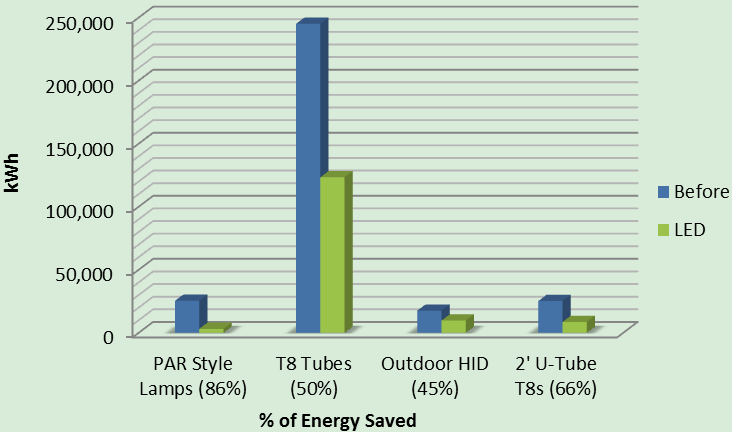
Frequently Asked Questions