

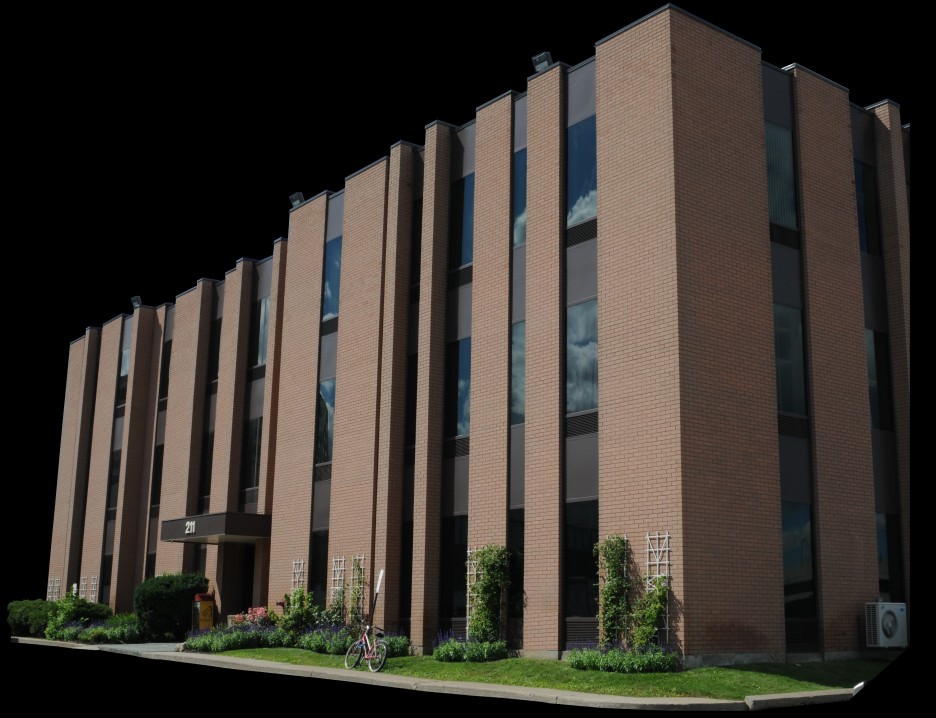
211 Consumers Road is a 40+ year-old office building originally constructed when electricity was inexpensive. Rising energy costs made it essential to improve energy efficiency while maintaining competitiveness. Building management focused on HVAC and lighting upgrades, ultimately transitioning to LED technology.

The interior lighting at 211 Consumers primarily relied on first-generation T8 fluorescent tubes. These fixtures required frequent replacement due to burnt-out lamps and failing ballasts, resulting in ongoing maintenance labor and increased operating costs. Growing concerns around mercury exposure also forced management to address fluorescent tube disposal. When evaluating the full life-cycle cost of T8 fluorescent lighting, re-lamping and disposal emerged as significant expenses. Additionally, the use of five different fixture types increased inventory requirements for tubes and ballasts. Common areas such as lobbies, hallways, and stairwells operated lighting 24/7, while the lower lobby relied on PAR38 halogen lamps that consumed excessive amounts of power.

Exterior lighting consisted of a combination of HID spotlights and wall packs rated at 400 watts and 250 watts, respectively, which were necessary to maintain property security but contributed heavily to overall energy consumption.

Energy Management Goals

  • Reduce overall lighting energy costs by 50%
  • Reduce operating costs related to T8 re-lamping
  • Find a feasible solution for the ongoing disposal of mercury-poisoned fluorescent lamps
  • Maintain high-level of building security, inside and outside, with proper lighting
  • Improve aesthetics with lighting solutions
  • Achieve a payback period of two years or less
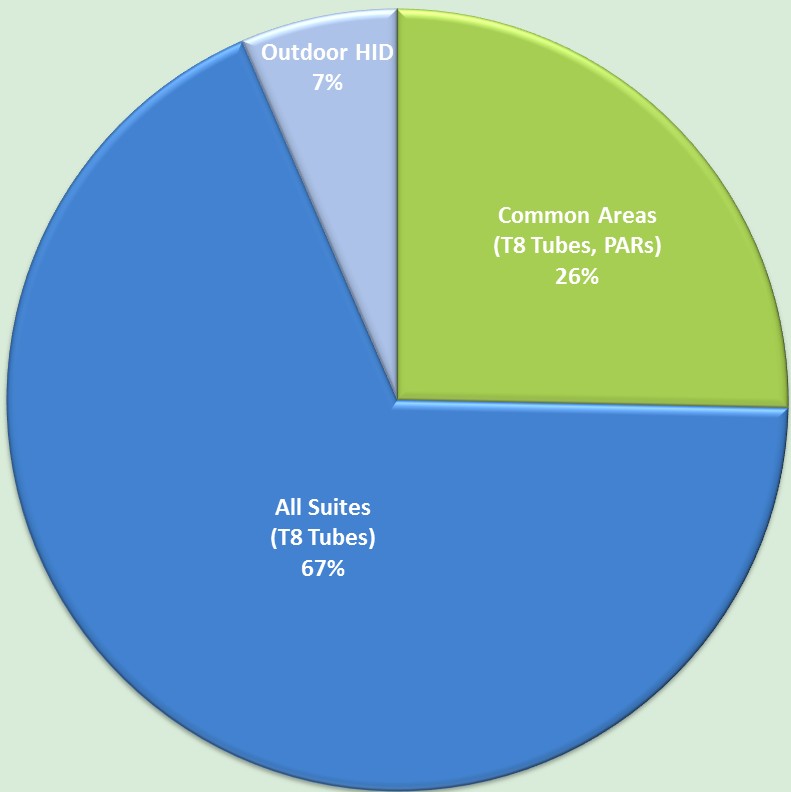
Initial Lighting Energy Consumption

Tenant Suites > 215,650 kwh

Common Areas > 80,070 kwh

Outdoor Lighting > 20,586 kwh

Annual Lighting Total > 316,250 kwh

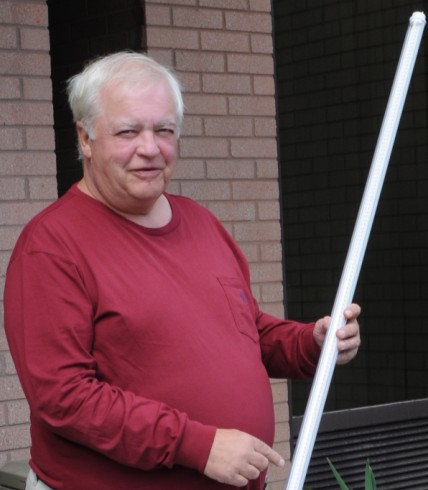
Energy Use BEFOREEnergy Use AFTEREnergy Drop
4’ T8 Tubes245,087 kWh
60 kW
LED T8 Tubes123,328 kWh
33 kW
49%
2’×2’ U-Tube T825,229 kWh
2.9 kW
2’×2’ LED Panels8,673 kWh
1.0 kW
65%
PAR Lamps25,404 kWh
2.9 kW
LED PAR Lamps3,155 kWh
0.4 kW
87%
HID Exterior17,597 kWh
4.7 kW
DHID Retrofits9,735 kWh
2.6 kW
45%
TOTAL

313,317 kWh

70 kW

TOTAL

144,891 kWh

37 kW

54%

Implementing LED Technologies

After evaluating the lighting technologies available in the marketplace, building management made the decision to transition entirely from fluorescent lighting to LED solutions. This shift was driven in part by the wide range of LED options available, including T8-style lamps compatible with existing fixtures, PAR lamps, and LED flat panels capable of replacing complete T8 fixtures.

With a lifespan exceeding 50,000 hours, these LED technologies are expected to reduce electricity consumption by 50–65%, depending on the application, while lowering operating costs related to re-lamping and disposal by approximately 60%. Existing T8 fluorescent fixtures were retrofitted with T8 LED lamps by removing the ballasts and rewiring the fixtures, reducing lamp wattage from 32 watts to just 18 watts. Additionally, 2’ × 2’ fixtures that previously consumed 66 watts were replaced with high-efficiency 22-watt LED panels. PAR lamps achieved an 87% reduction in wattage when upgraded to LED alternatives.

All LED products installed as part of the retrofit were eligible for rebates from Toronto Hydro under the OPA’s saveONenergy program.

The Results

The results of the retrofit surpassed the original goal with a total energy reduction of 54%. Annual savings from reduced electricity consumption is expected to exceed $20,000. Based on the capital invested for the retrofit of the common areas, the ROI for the common areas was about 60% with a 20 month payback period based on energy savings alone. The rebate from Toronto Hydro covered about 15% of the cost of the project. Once the original ballasts and fluorescent T8 lamps were replaced with the LEDs, the monthly replacement of burned out ballasts and lamps ceased. This is expected to result in an additional operational savings of $1,700 each month, saving the building about $100,000 in operational and replacement costs over the life of the project.
Energy Saved

54%

Energy Savings per

$20,212

Total Savings Over 5 Years

$201,060

Decrease in Electricity Demand

33 KW

Decrease in Electricity Consumption

168,426 kwh
Frequently Asked Questions
1How much did 211 Consumers Road save on their lighting costs?
The building achieved a 54% reduction in overall lighting energy consumption, saving over $20,000 annually on electricity costs alone. Over five years, the total savings reached approximately $201,060, which includes both energy savings and reduced maintenance expenses of about $100,000 from eliminated re-lamping and ballast replacement needs.
2What was the payback period for this lighting retrofit project?
The common areas retrofit achieved a 20-month payback period based solely on energy savings, with a return on investment of approximately 60%. The Toronto Hydro rebate covered about 15% of the project cost, further improving the financial return.
3What types of lighting were replaced in this project?
The project replaced first-generation T8 fluorescent tubes (32 watts) with T8 LED lamps (18 watts), upgraded 2' × 2' fixtures consuming 66 watts to high-efficiency 22-watt LED panels, and replaced PAR38 halogen lamps in common areas with LED alternatives that achieved an 87% reduction in wattage. Exterior HID spotlights and wall packs were also retrofitted with LED technology.
4Did the building maintain proper lighting levels and security after the retrofit?
Yes, the retrofit maintained high-level building security both inside and outside while improving aesthetics. The LED upgrades provided proper illumination for hallways, stairwells, and common areas that operate 24/7, while exterior lighting continued to meet security requirements with significantly reduced energy consumption.
5Were there rebates available for this type of project?
All LED products installed as part of the retrofit were eligible for rebates from Toronto Hydro under the OPA's saveONenergy program, which covered approximately 15% of the total project cost.
6How much maintenance savings were achieved?
The building eliminated the monthly replacement of burned-out ballasts and fluorescent lamps, resulting in operational savings of approximately $1,700 per month. Over the life of the project, this is expected to save about $100,000 in operational and replacement costs, as LED products have a lifespan exceeding 50,000 hours.
7Can existing fixtures be upgraded without complete replacement?
Yes, most existing T8 fluorescent fixtures were retrofitted with T8 LED lamps by removing the ballasts and rewiring the fixtures. This approach preserved the original fixtures, limited waste, and avoided the need for extensive ceiling work while achieving significant energy savings of 49% for standard tubes and 65% for panel replacements.
January 13, 2026
why warehouse lighting costing higher

Why Your Warehouse Lighting is Costing You 40% More Than It Should (And How to Fix It)

Is your current warehouse lighting costing you more in overhead than it should, silently draining your annual profit margins?” For facility managers in Ontario’s industrial heartlands-from the high-velocity logistics hubs of Brampton to the manufacturing plants of Windsor-the monthly hydro bill is often viewed as an unavoidable cost of doing […]
January 7, 2026
commercial ev charging stations

Is Your Business Ready for EV Charging Station?

By 2035, every new light-duty vehicle sold in Canada will be electric. For facility managers in Ontario, this isn’t just a distant environmental goal, it is a looming infrastructure requirement. Whether you manage a retail plaza, a multi-unit residential building (MURB), or an industrial fleet, the demand for commercial EV […]
January 2, 2026
outdoor light fixtures canada

Best Outdoor Light Fixtures for 2026

Ask any Canadian homeowner or property manager what kills outdoor lights the fastest, and the answer is unanimous: winter. Salt, ice, -38°C wind chills, and spring thaw cycles turn cheap big-box fixtures into rusty, flickering eyesores in less than three seasons. After installing and testing outdoor light fixtures from Vancouver […]
December 29, 2025
guide to commercial lighting rebates Ontario

Navigating Commercial Lighting Rebates in Ontario: A 2026 Guide

For many facility managers and property owners in Toronto, Ontario, the decision to upgrade to energy-efficient LED lighting is often delayed by one primary concern: the upfront cost. However, in 2026, the financial landscape for energy retrofits will become more favorable than ever. Between rising electricity rates and aggressive provincial […]
December 26, 2025
hjigh bay led fixtures for warehouses

High Bay Heroes: Choosing the Right Fixture for Warehouses & Factories

In the world of industrial facility management, not all ceilings are created equal. Whether you are managing a high-density distribution center with narrow aisles or a sprawling open-concept manufacturing plant, the “hero” of your infrastructure is your high bay led fixtures. As of 2025, the technology behind these fixtures has […]
December 24, 2025
led retrofit lighiting solutions

The ROI of Light: How Much Can an LED Retrofit Save Your Business?

Across Canada, facility managers are being squeezed from both sides. Energy costs keep climbing, and expectations around sustainability and efficiency are no longer optional. Many organizations respond by planning large capital projects-new equipment, major renovations, complex system upgrades. But one of the most effective ways to reduce costs often goes […]