

What Does DLC Certification Mean & Why Does It Matter?

Understanding Types of Light Bulbs, Sizes, Shapes, and Codes
February 12, 2026
If you have ever shopped for commercial LED fixtures in Canada and noticed a small logo that reads DLC or DLC Premium, you have probably wondered what it actually means — and whether it matters for your project. The short answer is: it matters quite a bit, especially if you are planning to claim lighting rebates through a Canadian utility program. Here is everything you need to know.
What Is the DesignLights Consortium (DLC)?
The DesignLights Consortium — commonly known as the DLC — is a non-profit organisation whose mission is to accelerate the adoption of high-performing, energy-efficient lighting in the commercial sector. Founded in 1998 as a regional initiative through the Northeast Energy Efficiency Partnerships (NEEP), the DLC has grown into North America’s most authoritative independent voice on commercial LED lighting quality.
Unlike safety certifications such as CSA, UL, or ETL, the DLC is not a safety standard. It is a performance standard — one that tells buyers a fixture meets rigorous benchmarks for energy efficiency, light quality, and longevity. Today, the DLC’s Qualified Products List (QPL) is widely regarded as the gold standard for commercial-grade LED fixtures in both the United States and Canada.
How Does DLC Certification Actually Work?
For a manufacturer to earn a DLC listing, the process is neither quick nor simple. It requires:
- Paid application submission to the DLC on a product-by-product basis.
- Third-party laboratory testing by an accredited facility — manufacturers cannot self-certify.
- Photometric and electrical testing under IES methods LM-79, LM-80, and In-Situ Temperature protocols.
- A minimum five-year product warrantyfrom the manufacturer.
- An existing safety certification (UL, ETL/cETL, or CSA) as a prerequisite.
Once listed, products appear publicly on the DLC Qualified Products List — a searchable database that utilities, specifiers, and facility managers across Canada rely on when qualifying projects for rebate programs.
DLC Standard vs. DLC Premium: What Is the Difference?
The DLC currently offers two tiers of qualification:
| Criteria | DLC Listed (Standard) | DLC Premium |
| Efficacy (lm/W) | Meets baseline requirements | Exceeds baseline — higher lumens per watt |
| Color Quality (CRI) | Minimum CRI 80 | Tighter CCT consistency; CRI 80+ |
| Dimming | Must dim to at least 10% output | Same; controls-ready emphasis |
| Rebate Eligibility | Qualifies for most rebate programs | Qualifies for highest rebate tiers |
| Warranty Required | 5 years minimum | 5 years minimum |
Table 1 — DLC Standard vs. DLC Premium at a glance.
In practical terms, DLC Premium fixtures consume 30–50% less energy than non-certified counterparts, and in 2024, over 75% of utility rebate programs in North America required DLC certification for LED products — with many of the highest-value incentive tiers reserved exclusively for DLC Premium fixtures.
Why DLC Certification Matters for Canadian Businesses
1. It Unlocks Utility Rebates Across Canadian Provinces
The most immediate financial reason to care about DLC certification is rebate eligibility. In Ontario, for example, the Save on Energy Retrofit Program requires fixtures to be DLC or Energy Star certified.
Most provincial rebate programs cover 25–50% of total project costs — sometimes more. According to Faraday Lighting’s rebate guide for Ontario, businesses that choose DLC Premium-certified products access the highest rebate tiers, sometimes cutting payback periods to one to two years.
| Real-World Example
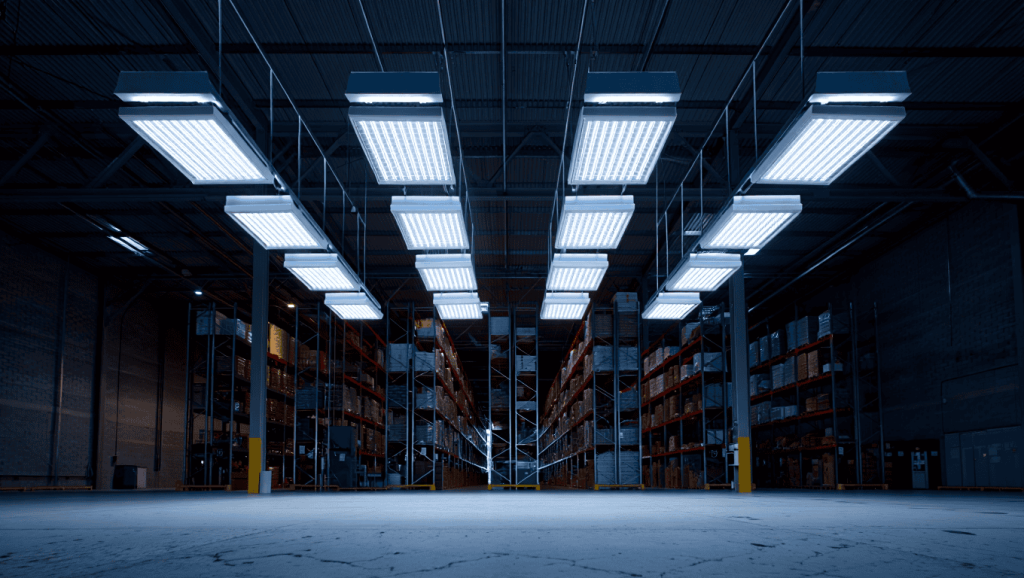
A typical Ontario warehouse running 100 metal halide fixtures spends roughly $22,000 per year in lighting energy costs. After a certified LED retrofit, that figure drops to approximately $8,250 — with DLC-certified fixtures qualifying for rebates that often push total annual savings above $16,000. See the full breakdown in our LED retrofit savings guide. |
2. It Is a Verified Performance Guarantee
The DLC QPL only lists products that have passed independent laboratory testing. Manufacturers cannot simply claim DLC compliance — they must prove it. A study by the Northwest Energy Efficiency Alliance found that DLC-certified LED products had a failure rate of less than 1% over five years, compared to 7% for non-certified LEDs.
For facility managers responsible for warehouses, arenas, parking structures, or manufacturing floors, that difference in reliability has a direct impact on maintenance costs and operational continuity.
3. It Ensures High-Quality Light for Your Space
DLC certification is not only about energy efficiency — it also sets the bar for light quality. Certified fixtures must meet strict specifications for:
- Color Rendering Index (CRI): A minimum of 80, ensuring colours appear accurate and natural.
- Correlated Color Temperature (CCT): Tight consistency across fixtures so lighting looks uniform, not patchy.
- Glare control: Unified Glare Rating (UGR) criteria to protect worker comfort.
- Spectral quality: Requirements introduced in SSL V5.1 to support visual comfort and productivity.
For Canadian businesses in retail, healthcare, manufacturing, and office environments, these quality standards translate directly into better visibility, reduced eye strain, and improved employee productivity.
DLC vs. Safety Certifications: Understanding the Difference
This is one of the most common points of confusion among buyers in Canada. Certifications such as CSA, cULus (UL for Canada), or cETL are mandatory safety standards. All electrical products sold in Canada are legally required to carry one of these marks. No CSA or equivalent certification = no legal sale in Canada.
DLC certification is different. It is voluntary, performance-based, and specific to commercial lighting. A fixture without DLC listing can still be legally sold in Canada — it simply will not qualify for most utility rebate programs, and it may not meet the performance benchmarks that experienced lighting specifiers, property managers, and procurement teams require.
| Feature | DLC | CSA / UL / ETL |
| Mandatory in Canada? | No | Yes |
| Focus | Performance & energy efficiency | Electrical safety |
| Rebate qualifier? | Yes — key requirement | Not directly |
| Covers consumer products? | No — commercial only | Yes — all product types |
Table 2 — DLC vs. mandatory safety certifications in Canada.
DLC-Certified LED Fixtures Available in Canada
At Faraday Lighting, most of our commercial and industrial product lines carry DLC Premium certification, ensuring they qualify for the highest utility rebate tiers across Ontario and beyond. Our DLC-certified range includes:
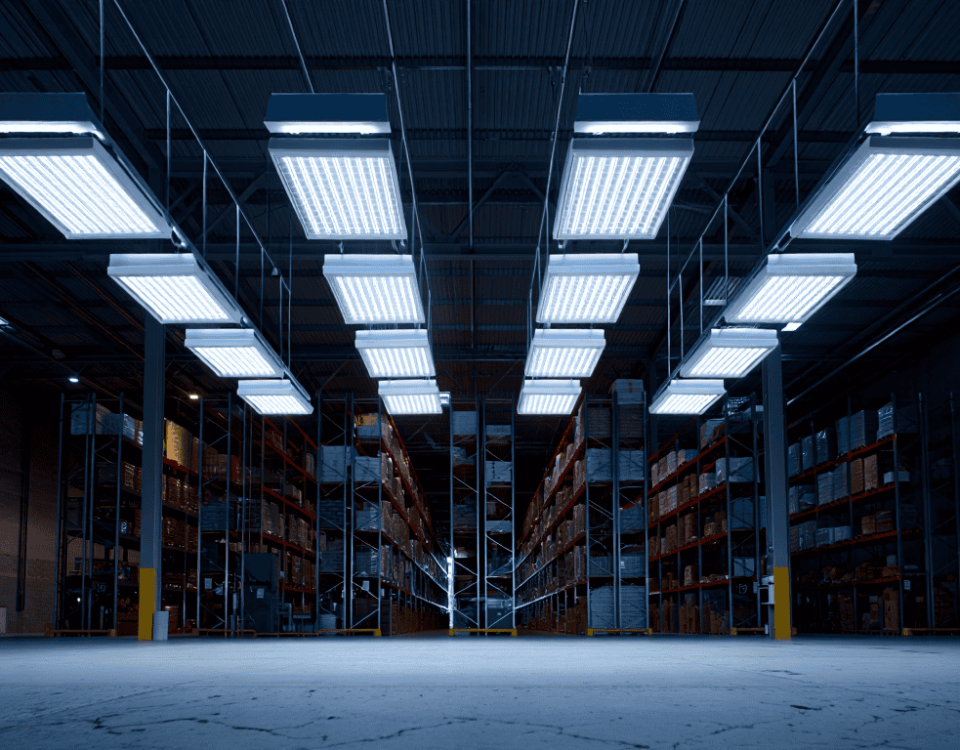
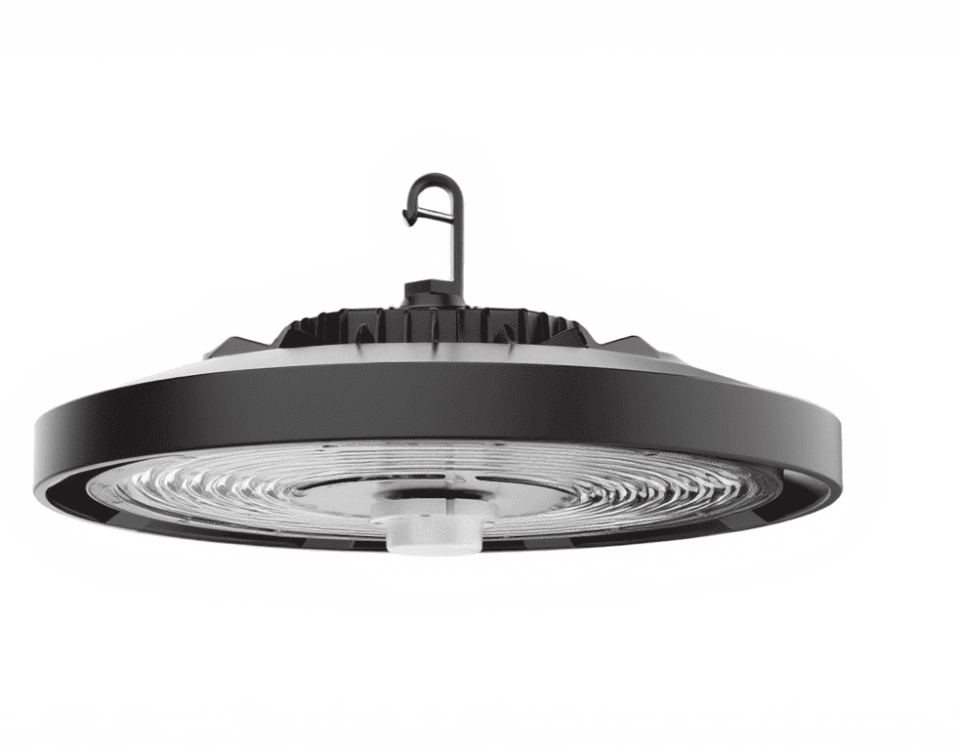
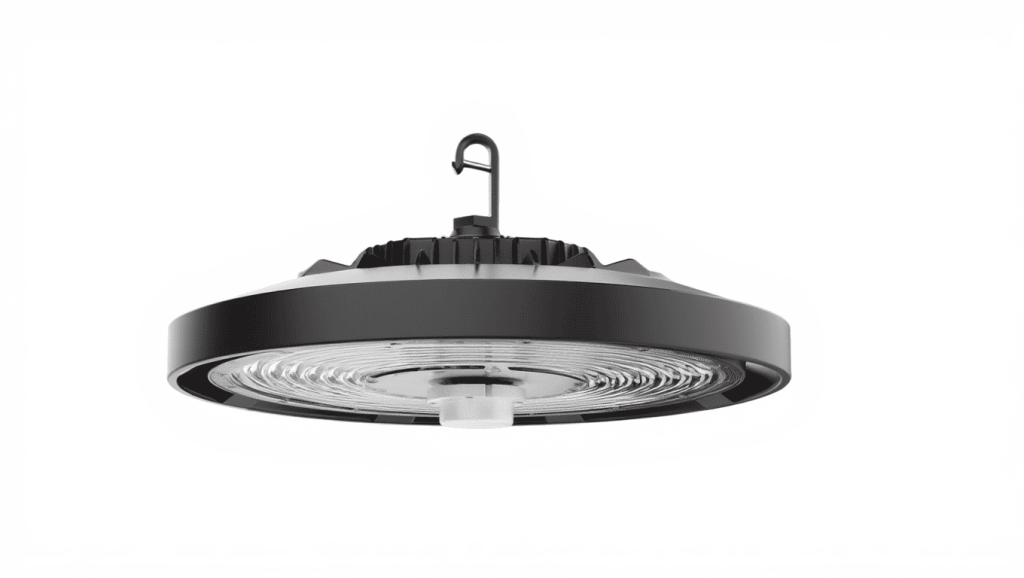
- LED High Bay Fixtures— UFO and linear options for warehouses, factories, and arenas, delivering 140+ lm/W.
- LED Wall Packs— Full-cutoff exterior fixtures for building perimeters, loading docks, and parking areas.
- LED Flat Panels & Troffers— Office-grade fixtures with tight CCT consistency and UGR compliance.
- Linear LED Fixtures— Vapour-tight and commercial strip models for demanding industrial environments.
- Decorative Pole Top Fixtures— DLC Premium-listed for outdoor municipal, campus, and commercial plaza applications.
Each of these product families is supported by our turnkey lighting solutions, which include lighting audits, photometric simulations, rebate management, and ESA-compliant installation.
The Bottom Line
For Canadian facility managers, property owners, and procurement professionals, DLC certification is one of the most reliable quality signals available when sourcing commercial LED lighting. It independently verifies that a fixture will perform as advertised, last as long as warranted, and qualify for the energy rebates that make your retrofit project financially viable.
A product that is not on the DLC QPL is not necessarily a bad product — but it is one that carries more uncertainty, fewer rebate options, and less accountability. When you are making a long-term investment in your facility’s lighting infrastructure, those differences matter.
Explore Faraday Lighting’s full range of DLC-certified commercial LED fixtures, or learn more about how our lighting audit and rebate services can help your business capture maximum energy savings.
Frequently Asked Questions About DLC Certification
Is DLC certification mandatory to buy LED lights in Canada?
No. DLC listing is not a legal requirement to purchase or sell LED lighting in Canada. However, it is effectively required if you want your project to qualify for most utility rebate programs. Without it, you will miss out on significant incentives that can cover 25–50% of your project cost.
What is the difference between DLC listed and DLC Premium?
Both tiers meet DLC’s quality and efficiency standards, but DLC Premium fixtures achieve higher efficacy levels, tighter colour consistency, and are rewarded with higher rebate values. For most commercial projects in Canada, specifying DLC Premium is the smarter long-term choice.
Does a product need to be DLC listed to qualify for Ontario’s Save on Energy rebates?
Yes — Ontario’s Save on Energy programs, along with most other provincial and municipal utility incentive programs, require fixtures to be DLC (Standard or Premium) or Energy Star certified. Products that do not appear on the DLC Qualified Products List generally do not qualify.
How long does DLC certification last?
DLC listings are not permanent. The DLC periodically updates its technical specifications (SSL V5.1 is current; V6.0 is in development). Products must be re-tested and re-submitted to remain listed when new versions take effect. Products that fail to meet updated standards are removed from the QPL, which is another reason to work with a supplier that actively monitors certification status.
Does DLC cover consumer lighting products?
No. DLC certification applies exclusively to commercial-grade lighting products. You will never see a DLC label on a residential LED bulb. For consumer products, Energy Star is the relevant program.